Alpha-gal syndrome (AGS) is a serious allergic condition caused by a bite from the Lone Star tick. Unlike most food allergies that develop in childhood, AGS can strike anyone at any age — and it is rapidly becoming one of the most significant emerging tick-borne health threats in the United States, particularly across the Midwest and South.
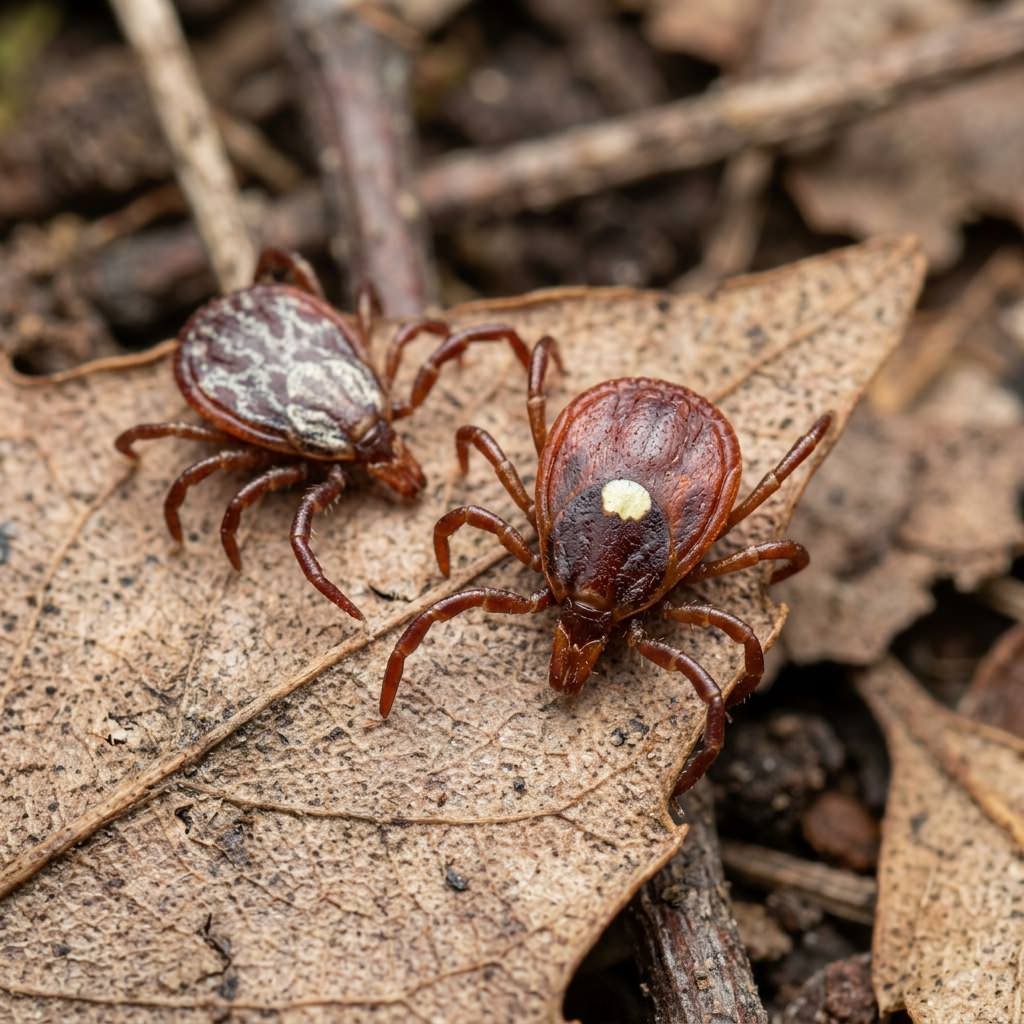
The Lone Star tick (Amblyomma americanum) — identifiable by the single white dot on the female's back
What Is Alpha-Gal Syndrome?
Alpha-gal syndrome is a food allergy to a sugar molecule called alpha-gal (galactose-alpha-1,3-galactose). This molecule is naturally found in the cells of most mammals — including the red meats we eat — but it is not present in humans.
Lone Star ticks carry alpha-gal in their saliva. Under normal circumstances, eating red meat containing alpha-gal poses no problem. However, when a Lone Star tick bites a person, it transfers alpha-gal directly into the bloodstream. In some people, the immune system recognizes this as a foreign threat and mounts an antibody response. Once sensitized, eating red meat or consuming other mammalian products can trigger a significant allergic reaction.
How Widespread Is It?
Who Is Most at Risk?
Anyone who spends time outdoors in areas where Lone Star ticks live is potentially at risk. The Lone Star tick's range covers most of the eastern United States, with the highest concentrations in:
- South-Central states: Texas, Oklahoma, Arkansas, Missouri
- Southeast: Tennessee, Kentucky, Georgia, the Carolinas, Virginia
- Midwest: Illinois, Indiana, Ohio, Iowa — where cases are rising rapidly
- Mid-Atlantic: Maryland, Delaware, New Jersey, New York
People at highest exposure risk include hunters, hikers, farmers, landscapers, and anyone who regularly spends time in wooded, grassy, or brushy areas. As the Lone Star tick's range continues to expand northward — driven in part by milder winters — AGS is now being reported in states where it was previously unknown.
Symptoms of Alpha-Gal Syndrome
Symptoms typically appear 3–6 hours after eating red meat or other mammalian products and can range from mild to life-threatening:
- Throat tightening or difficulty breathing
- Rapid drop in blood pressure
- Loss of consciousness
- Severe swelling of the lips, tongue, or throat
Mild to Moderate Symptoms
- Hives, itching, or rash anywhere on the body
- Stomach cramps, nausea, vomiting, or diarrhea
- Heartburn or indigestion
- Runny nose or sneezing
- Headache
- Mild swelling of the lips or eyelids
Severe Symptoms (Anaphylaxis)
- Shortness of breath or wheezing
- Rapid or weak pulse
- Severe drop in blood pressure
- Swelling of the throat, making swallowing or breathing difficult
- Loss of consciousness
What Foods Must Be Avoided?
People with AGS must avoid foods that contain mammalian-derived alpha-gal. The list is broader than most people expect:
✘ Avoid with AGS
- Beef, pork, lamb, venison
- Organ meats (liver, kidney)
- Dairy products (milk, cheese, butter)
- Gelatin (found in many candies, marshmallows, Jell-O)
- Some medications with gelatin capsules
- Certain vaccines and medical products derived from mammals
- Lard and animal-based fats
✔ Generally Safe
- Chicken, turkey, duck
- Fish and shellfish
- Fruits and vegetables
- Grains, rice, pasta
- Legumes and beans
- Plant-based dairy alternatives
- Eggs
Note: Tolerance levels vary between individuals. Some people with mild AGS can tolerate dairy; others cannot. Always work with your allergist to determine your personal thresholds.
How Is Alpha-Gal Syndrome Diagnosed?
AGS is diagnosed through a combination of medical history and a blood test that detects IgE antibodies to the alpha-gal molecule. Because the delayed reaction is unusual and symptoms overlap with many other conditions, it is commonly misdiagnosed as irritable bowel syndrome, anxiety, or idiopathic anaphylaxis before the true cause is identified.
If you suspect AGS, ask your doctor for a specific alpha-gal IgE blood test. Not all general practitioners are familiar with AGS — an allergist or immunologist is often the best specialist to consult.
Can Alpha-Gal Syndrome Go Away?
Possibly — but not quickly. Some people report regaining the ability to eat small amounts of red meat after several years of strict avoidance and no further tick bites. However, this is not guaranteed, and additional tick bites can re-sensitize the immune system and make the allergy worse. There is currently no treatment that reverses AGS; strict dietary avoidance remains the only management strategy.
Prevention Is Everything
The only way to avoid alpha-gal syndrome is to prevent Lone Star tick bites. This means using a proven tick repellent every time you go outdoors in at-risk areas, performing thorough tick checks after every outing, and removing any attached ticks promptly and safely.
Protect Yourself from Lone Star Ticks
Browse our top-rated natural tick repellents and removal tools — your first line of defense against AGS.
View Repellents View Removal ToolsFor more on the Lone Star tick and other tick species found across the US, see our full Types of Ticks identification guide.